




第四次工业革命的曙光似乎就在眼前了,人造智能、机器人技术、量子计算、3D打印和物联网等领域的进步,带领我们见证了一个又一个新突破。(文末更多往期译文推荐)
近年来,另一项突飞猛进技术是大数据。信用卡公司追踪并收集消费者的各种数据,如他们买了什么、通过什么渠道买的以及什么时间买的。 智能手机是推动大数据发展的另一关键,因为通过手机也可以追踪购物数据和媒体消费数据,甚至是消费者全天的位置信息。
现在我们有如此多的数据,对即将到来的第四次工业革命将会起到什么样的作用呢?让我们来看一看这场革命会给我们带来什么,看一看大数据将在其中扮演什么样的角色,未来又将如何发展。
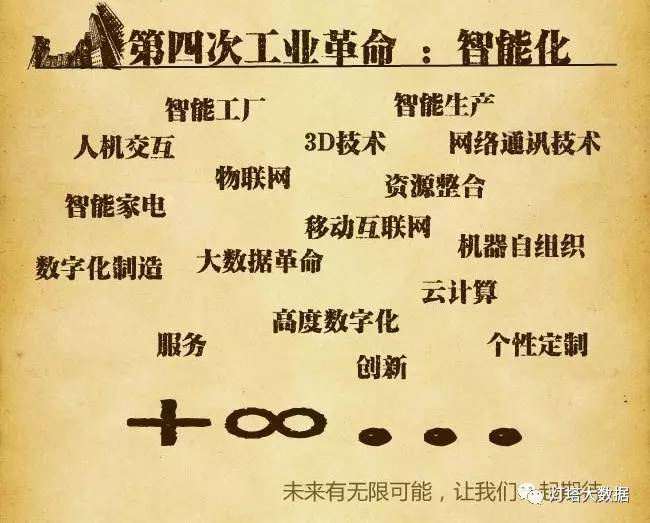
?什么是“第四次工业革命”?
在给“第四次工业革命”下定义之前,我们有必要回顾一下之前的三次工业革命。
第一次工业革命发生在18世纪到19世纪,当时人们发明了蒸汽机和机械生产方式。第二次工业革命始于十九世纪末,就在第一次世界大战之前,那时电报和工业缝纫机等发明被带进人们的生活。
到了20世纪70年代末,第三次工业革命发生了。这场工业革命仍在持续,给人们带来了互联网和智能手机等智能设备。
由于第四次工业革命仍处于蓄势阶段,所以这个概念现在还有点抽象。然而,可以肯定的是它会将开启全面人造智能时代,让所有的机器都能相互通信和学习,将对生产活动造成深刻影响。

“第四次工业革命”的命脉
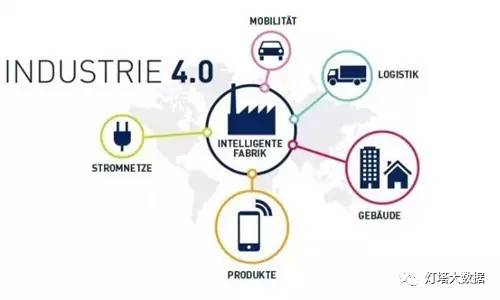
第四次工业革命也被称为“工业4.0”时代,在分析这场工业革命时,我们不禁会疑惑,大数据将在其中发挥什么作用。
简单来说,大数据对第四次工业革命“至关重要”。有些人甚至说大数据就是“工业 4.0”。 例如,在制造业方面,在大数据分析的改进和高效率辅助下,制造业未来五年预计利润增长数十亿美元。
也有人提出了“人工智能加上大数据等于第四次工业革命”的方程式。一方面,我们可以看到,自动化的机器将替代人类完成一些繁琐的工作。另一方面,在管理和利用数据时,也产生了更多新的就业岗位。
制造业之外
纵观历史,对工业革命的评价常常要通过分析其对产品和产品生产及制造造成的影响。即将到来的“工业4.0”也是一样,但这一次的工业革命将会影响制造业之外的更多行业。
以金融服务为例,这一领域的专家们将大数据视为“新的电力”,正如蒸汽、电和数字技术改变了世界一样,大数据也将带来颠覆性影响。
举例来说,智利的一家公司使用大数据和机器学习来预测个人客户偿还贷款的可能性。回想20或30年前,要确定一个人的信用评分往往需要花费大量时间和精力。而现在,通过汽车信贷记录、公用事业账单和人口普查数据等信息,结合预测机器学习,这一过程几乎可以瞬时完成。
大数据与物联网
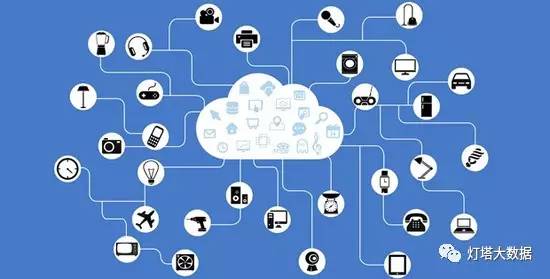
第四次工业革命的核心概念之一是所有机器和设备能够相互连接、相互交流和学习。在早期阶段,就和物联网(IoT)类似,物联网的概念即是汽车、冰箱、电视机、烤箱和家庭安全系统等日常物品都连接到互联网。
借助人造智能,我们将节省下大量决策时间,我们将看到这些产品和概念是如何让我们的生活变得更轻松,如何创造出新的商机。
正如一位IBM分析师所说,人工智能和物联网的共同之处在于它们都使用和分析大数据。 对这三个领域进行投资的公司极有可能在第四次工业革命中占得先机,成为时代前沿的领导者和创新者。
再谈就业问题
一直以来有种观点认为,第四次工业革命和物联网、机器人技术、大数据等技术发展将导致很多人失业。这就产生了一个悖论,即我们的社会生产效率提高了,但是工人们却负担不起这些产品了。
这是一种相当悲观的预测。事实上,如果我们从乐观的角度来看,大数据、机器学习和人工智能将带领人们走向更高级的社会状态,人人都可以享受奢华的生活,因为人们不再需要进行枯燥繁重的体力劳动,机器将代替人类去完成它们,这样一来,人们就可以更好地专注于只有人类才能完成的工作,如发明创造、艺术创作、科学研究和探索发现。
因此,虽然“工业4.0”将导致很多人失业,但是人们可以创造出更多新的就业机会。
可能你还没有发现,大数据已经在我们的生活中发挥了巨大的作用。 虽然我们还没有到电影《未来报告》中描述的水平,但是大量数据已经被用于精准营销,你的年龄,性别,购物习惯和位置等数据都得到了利用。虽然很多公司表示他们使用的都是匿名数据,但他们的确使用了大数据技术针对你的喜好对你进行广告投放。
“第四次工业革命”就在眼前,当第四次工业革命正式开启时,大数据将发挥越来越重要的作用。

英文原文
What is big data’s role in the fourth industrial revolution?
What is big data’s role in the fourth industrial revolution?
We stand at the dawn of the fourth industrial revolution, an idea that will see new breakthroughs thanks to advancements in areas including artificial intelligence, robotics, quantum computing, 3D printing and the Internet of Things.
Another technological growth area in recent years has been big data. Credit card companies track and collect all sorts of data on consumers, such as what they buy, how they buy it and when they do their shopping. Smartphones are another key player in big data because they can also track shopping data, as well as data on media consumption and even your location throughout the day.
With so much data available, what role will it have in the upcoming fourth industrial revolution? Here is a quick look at what that revolution entails, big data’s role and what it all means going forward.
What Is the Fourth Industrial Revolution?
When defining this fourth industrial revolution, it’s important to look at the three that preceded it.
The original industrial revolution took place in the 18th and 19th centuries and involved innovations such as steam engines and mechanical production. The second industrial revolution came along toward the end of the 19th century and just before World War I. It included advancements such as the telegraph and industrial sewing machines.
Fast forward to the late 1970s, and you have the third industrial revolution — a period that’s still ongoing and brought along things such as the internet and smartphones.
Since the buildup to the fourth industrial revolution is still happening, the idea of it is a bit abstract. However, it will involve a future in which artificial intelligence allows machines of all types to communicate with and learn from each other, an idea that could potentially have a huge impact on production.
The Lifeblood of the Fourth Industrial Revolution
When analyzing the fourth industrial revolution, also known as Industry 4.0, one natural question that arises is what role big data will play.
Put simply, big data will be vital to the fourth industrial revolution. In fact, some go as far as to say big data is Industry 4.0. In manufacturing, for example, improvements and efficiencies in the analysis of big data are expected to bring billions of dollars to the industry over the next five years.
Others look at it as an equation in which artificial intelligence plus big data equals the fourth industrial revolution. On one hand, you can see the possibility of job losses as autonomous machines take over tasks that humans have handled for years. On the other, there could be a slew of new jobs created when it comes to harnessing the power of data and using it in a meaningful way.
Beyond the Manufacturing Industry
Throughout history, industrial revolutions have often been judged by their impact on the production and manufacturing of goods and products. That’s no different with the looming Industry 4.0, but it will affect many other industries as well.
Take financial services, for example. In this field, experts view big data as “the new electricity” — the power source driving change in the way that steam, actual electricity and digital technology did before it.
In one example, a company in Chile uses big data and machine learning to predict the likelihood individual customers will be able to repay loans. If you look back 20 or 30 years, it took groups of human employees time and effort to determine your credit score. Now, using information such as automotive credit history, utility bills and census data, combined with predictive machine learning, that process can be almost instantaneous.
Big Data and the Internet of Things
Part of the fourth industrial revolution is the manner in which all types of machines and devices interact, communicate and learn from each other. At this early stage, it’s similar to the Internet of Things, or IoT — the concept in which everyday objects such as cars, refrigerators, TVs, ovens and home security systems are all connected to the internet.
Add on top of that a layer of artificial intelligence that saves time by making decisions for you, and you see how these products and ideas can make your life easier and even create new business opportunities.
As one IBM analyst puts it, the thing that AI and IoT have in common is the use and interpretation of big data. Companies that invest in all three areas — AI, IoT and big data — stand a good chance at becoming leaders and innovators in the fourth industrial revolution.
A Closer Look at Jobs
One way to look at the fourth industrial revolution and the rise of things such as IoT, robotics and big data, is that it will lead to the loss of jobs humans have held for years. That could in turn create a paradox in which societies can produce things much more efficiently, but there are fewer workers left who can afford those things.
That’s the doom-and-gloom forecast. Another sunnier vision of the future suggests big data, machine learning and AI could create a society in which everyone lives in luxury. And since humans won’t have to worry about doing the grunt work that machines have taken over, they can instead focus on other tasks that are exclusively human, such as invention, art, science and exploration.
In the end, it’s likely that this Industry 4.0 will cause many industries to lose jobs, but it’s up to humans to create new opportunities.
Big data already plays a huge role in your life, even if you don’t know it. While we’re not quite to the level of “Minority Report,” big data is already used to target advertising based on factors including your age, gender, shopping habits and location. Companies say they use such data on an aggregate and anonymous level, but the technology is there to target advertising specifically to you.
This is already happening, and the surface has only just been scratched. As we dive deeper into the reality of a fourth industrial revolution, big data will play an increasingly crucial role.
共有条评论 网友评论